

26 Dec Reliable Performance in Hard Ground, North Kalimantan
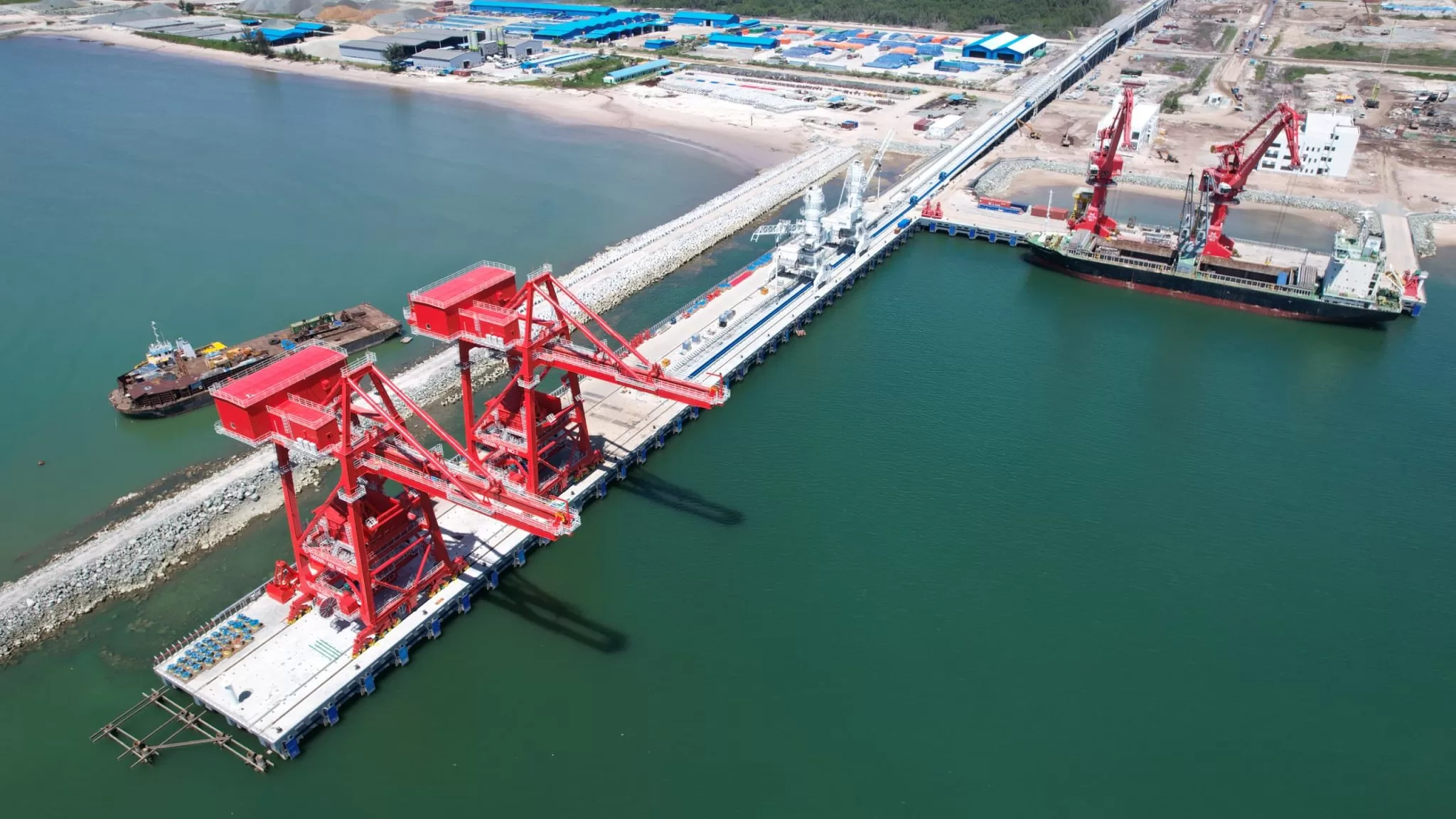
A jetty structure is designed to carry high axial loads and bending moments. For the jetty project in North Kalimantan, Indonesia, spun piles were chosen over other foundation systems due to the high concrete strength, superior bending resistance, lower maintenance cost, and better durability. These advantages make spun piles more reliable and cost-effective for marine structures.
Innovative Foundation Solution
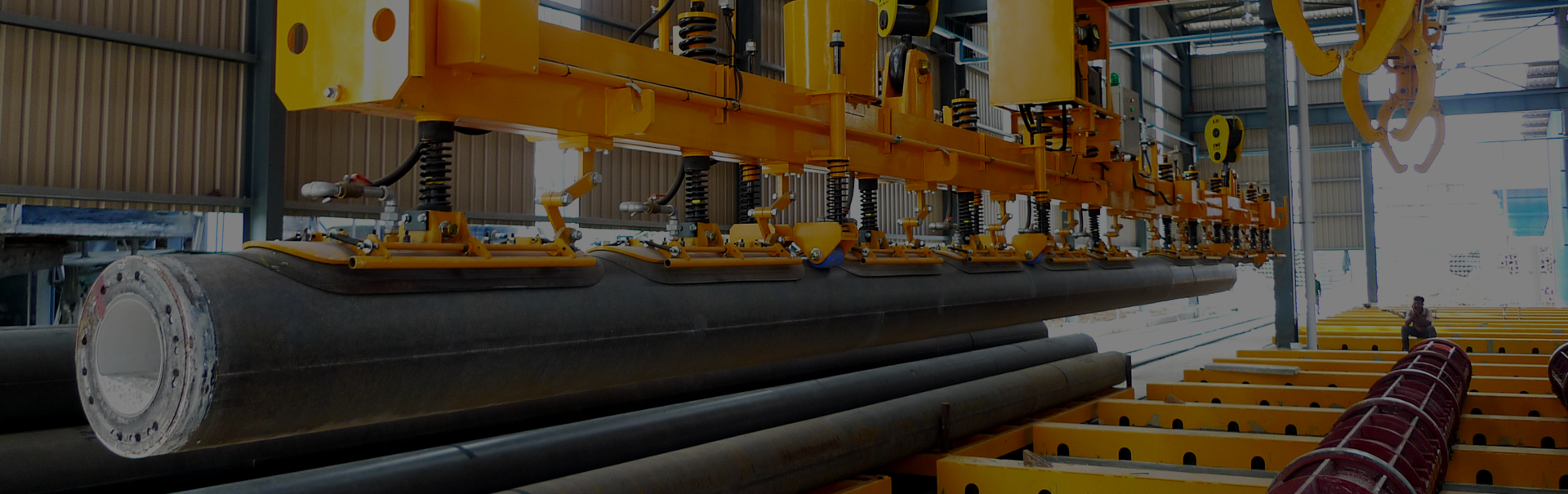
High-grade ICP spun piles with an 8-metre long pipe shoe were adopted as a hybrid solution for their cost-effectiveness and structural reliability. With a 1000 mm diameter Class C pile configuration, the piles were driven using a piling barge and diesel hammer, combining the drivability of steel with the durability of prestressed concrete in dense sandy ground conditions. The long pipe shoe eases the penetration and toe stability when it penetrates through the dense sand layer, enabling the required pile capacity to be achieved efficiently and more economically than full steel pipe piles.
Execution Under Extreme Conditions
The piles were successfully driven to the required set in dense sandy ground conditions. Only one pile could be driven per day due to dense sand soil and the cooling down duration required for the overheated diesel hammer helmet. Nevertheless, ICP piles were able to withstand these harsh conditions without damage, demonstrating the exceptional durability and quality.
Performance Advantages of Spun Piles
Pile Driving Analysis (PDA) and Maintained Load Testing (MLT) confirmed that all piles met or exceeded design requirements. ICP piles offer high uniform strength, excellent load-bearing capacity, and consistent structural performance. It efficiently transferred high axial loads deep into the soil while resisting lateral forces from waves and currents.
Proven Reliability
The piles’ performance in hard and resistant ground showcases their superior structural strength. This project confirms ICP piles as a trusted choice for challenging ground conditions and high-demand environments.